 A couple years ago, a Microsoft researcher named Gordon Bell embarked on a personal experiment: He would wear a video camera around his neck all the time and keep this "life recorder" always turned on, so it would record everything he did.
It was like an external memory drive for his brain, he wrote in a book called "Total Recall."
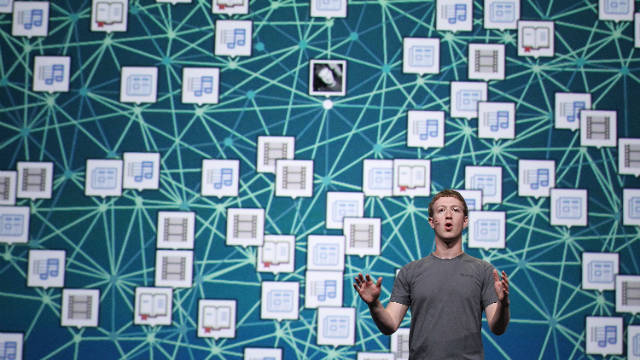
Sounds pretty sci-fi, right? Not so much. The "real-time sharing" updates Facebook announced Thursday aim to do something quite similar -- only for the Internet instead of in real life.
"Why do you share a story, video, or photo? Because you want your friends to see it. And why do you want your friends to see it? Because you think they'll get a kick out of it," he says. "I know this sounds obvious, but it's somehow eluded Zuckerberg that sharing is fundamentally about choosing. You experience a huge number of things every day, but you choose to tell your friends about only a fraction of them, because most of what you do isn't worth mentioning."Before we get into the details and implications, here's a "real-time" example of how the updates, which are rolling out in the coming weeks, will work: As I write this, I'm listening to the band LCD Soundsystem on an Internet music service called Spotify. Because I've updated my Facebook page (here's a TechCrunch article on how to do that if you're interested) and because I've logged in to Spotify with my Facebook identity, every song I listen to is automatically shared to Facebook.
In the old world of Facebook, I would have to click that I "liked" a song for it to show up on my Facebook profile page. That's something you have to think about: "OK, I really like this song, and I really want all of my friends to know that I'm listening to it right now." Now, sharing is both passive and automatic. It's a choice you make in advance -- one time -- and never again.
And so it goes with all kinds of the new "real-time" apps.
Since I've logged in to Yahoo! News with Facebook, every time I read an article on that site, it goes to my Timeline.
The same is true for Hulu and TV shows.
And for the Internet game "Words with Friends." When I play a Scrabble-style word in that game, it will show up on Facebook, along with an image of the current playing board.
For Facebook, this is obviously a good thing. The site's goal -- as postulated in "Zuckerberg's Law" -- always has been to get people to share more and more information about themselves. That's bound to happen in this new auto-share era.
Joint-tech-family verdict: We'll see how the public reacts to what Zuckerberg calls "real-time serendipity" when these changes launch in a few weeks. But if these changes stand, and if people do sign up for these new-new Facebook apps with auto-share built in, then all of us may soon have a semi-public record of everything we do online. Just like Bell, the researcher with a camera around his neck.
No comments:
Post a Comment